Seek out Stockholm this September: The heart of Sweden’s Success Story in Life Sciences
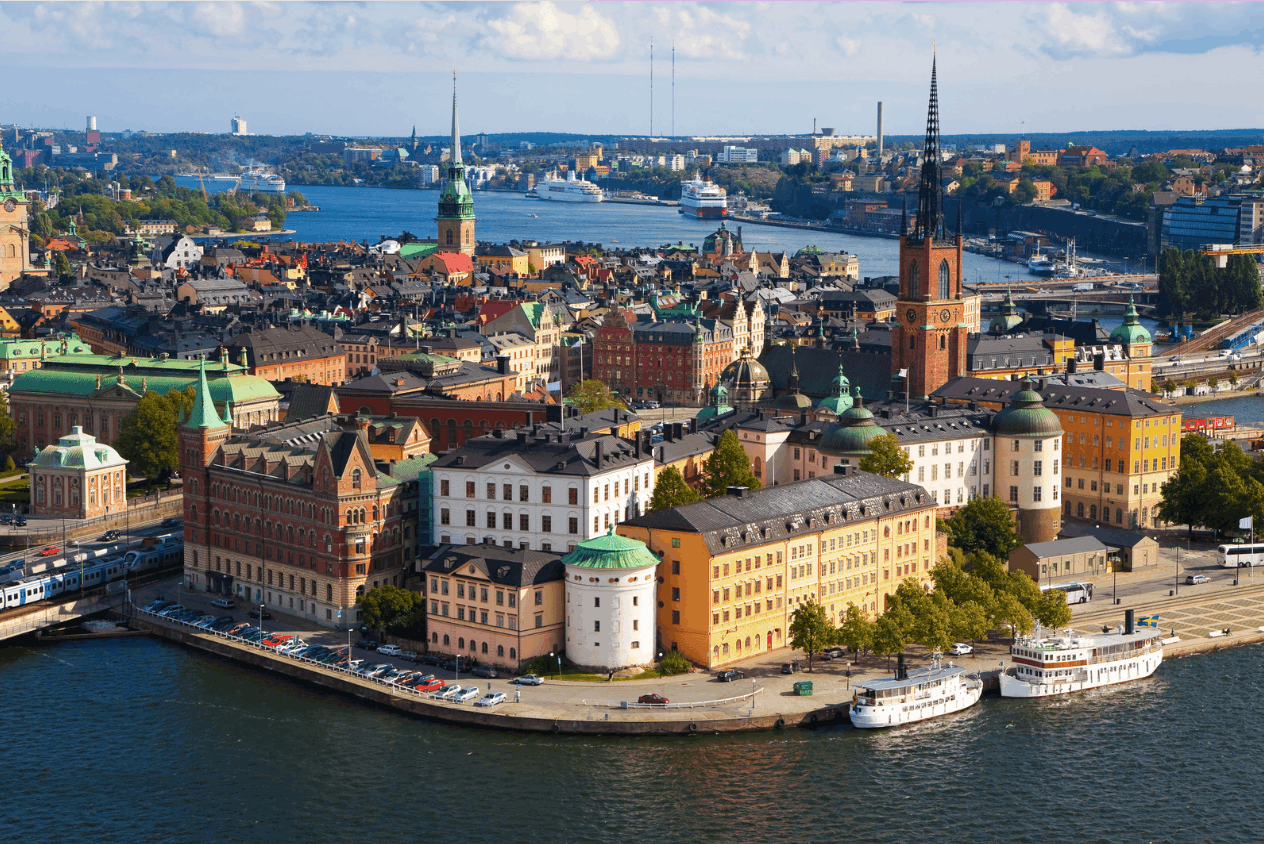
Life sciences is a global industry, as disease & disability know no boundaries, with many thriving hubs around the world. The Nordics have long been known for excellence in this vibrant ecosystem and shaping the future of healthcare. Sweden, with a population of around 10.7 million people, is the largest healthcare market in the Nordics. This autumn, Stockholm, Sweden’s glittering capital city where creativity thrives, will host Nordic Life Sciences Days for two packed days over 8-9 September.
This premier science event, produced by SwedenBIO, will bring together global & Nordic perspectives, covering how companies can navigate complexity, secure capital, and build competitive advantages in today’s fast paced, ever-changing world.
When all is said and done, none of these topics have easy answers, but they are critical to address, as health is wealth, and life sciences is a strategic priority for Europe’s competitiveness, resilience, and health. By exploring breakthrough science collaboratively, in person, the journey ahead can be better mapped, and milestones made more achievable.
To provide delegates with the best map for their journey into 2027 and beyond, this year’s NLSDays has an expanded strategic focus, with new interactive formats, making this dynamic platform for insights, partnerships, and growth, the most forward-looking event yet.
This year’s opening panel session on ‘Where Nordic Life Sciences Meets the World’ will build on how the region helps to foster innovation, attract international talent, and build resilient organizations. In this must-attend session, Stockholm’s Mayor, Karin Wanngård, will be on a panel with SwedenBIO’s CEO Jessica Martinsson, and International Director, Marjo Puumalainen, together with biotech CEOs Gunilla Osswald from BioArctic, and Andreas Goutopoulos from Actithera. Nordic innovation is translating into international partnerships, capital and patient impact, with Stockholm being the strong pulsing heart of this powerful Nordic innovation engine.
Mapping the ecosystem
Stockholm’s Science City Foundation strengthens the capital’s competitiveness in life sciences. It does this in many ways, including producing an excellent map and newsletter. The Stockholm-Uppsala region has set its sights on becoming one of the world’s leading life science hubs. Around 50% of all of Sweden’s life sciences companies and employees are based here. The whole ecosystem is covered, including global corporations, SMEs, investors, innovation leaders, universities, university hospitals, research centres and more. This essential map, which also covers nearby Södertälje and Strängnäs, shows how robust and active the sector is in this buzzing regional cluster.
Maps evolve as the territory changes and new hotspots emerge. A popular NLSDays session every year is the prestigious Nordic Stars pitch competition, where 14 Nordic life sciences companies compete to showcase how their innovations could change the world. For the winner, there’s EUR 10,000 in cash and two ‘golden’ all access tickets to NLSDays 2027. There’s no doubt about it that a polished pitch in the show’s main arena can boost visibility, and secure strategic partnerships and new investors. Check out this year’s talented line up here.
Checking your orientation
Orienteering, the fun sport of navigating your way around checkpoints using a map and compass, is derived from the Swedish word ‘orientering’. The word was coined in 1886 at the Karlberg Military Academy in Stockholm and was quickly picked up by Nordic neighbours Norway as a civilian sport, where the first public competition was held in 1897. As the innovators of orienteering, which supports mental and physical health, it’s no surprise that Stockholm has many noteworthy spots on its lifesciences map.
Another must-see area is the Hagastaden Innovation District, with over 175 life sciences companies and other organizations. This is a bustling business hub in a unique location close to Stockholm city. You can enjoy some easy life sciences orienteering practice here, as it is within easy walking distance of one of the world’s top hospitals, Karolinska University Hospital, as well as four leading universities. Also there is Sweden’s only specialized eye hospital, St. Eriks Eye Hospital, which is also one of Europe’s leading centres for vision science and advanced eye care, treating around 165,000 patients a year. Science needs talent to succeed, and in Stockholm there’s an abundant smörgåsbord to select from.
Dressed for Success
With its Nobel prizes, awarded annually at a black-tie event held at the Stockholm Concert Hall, Sweden recognises the very best of global scientific & medical talent. Back in 1901, the first Nobel prize for medicine was awarded to Emil von Behring for his work on serum therapy to combat the then widespread and lethal infectious respiratory disease, diphtheria. At the time, diphtheria took thousands of lives, and Emil’s Nobel citation said, ‘he has opened a new road in the domain of medical sciences and thereby placed in the hands of the physician a victorious weapon against illness and deaths”.
A long way down that difficult road, around 120 years later, it was AstraZeneca, which has strong Swedish & English DNA, who supported the roll-out of the first global vaccine for the lethal infectious respiratory disease, Covid. So, as well as visionary approaches to make the world see better, Sweden’s life sciences industry has, for well over a century, helped society breathe more easily too.
Across a carefully mapped-out program built around strategic shifts and spotlighting Nordic success stories, this year there are also major supersession themes on: breakthrough developments in CNS; the growing role of strategic VC arms; investment opportunities within the healthtech sector; and, another map which is well worth studying: the new global dealmaking map, which will focus on China’s innovation surge and the future of biopharma partnerships. All this and much more is why Stockholm is just perfect to host this year’s NLSDays (register here). Firmly put a pin in your map, and plan to enjoy success & smörgåsbord this September in Stockholm.
Want to know more about Sweden’s Life Sciences sector? Check out the insightful 2026 ‘Barometer Report’ by SwedenBio for the latest snapshot of the industry. An encouraging fact is the share of females CEOs has gone up by 5% since last measured, and is now at 31%, which is a positive development towards better gender equality at executive level.
For more about Sweden’s life sciences scene see also NLSDays features on Gothenburg, Sweden’s second city and a buzzing biotech hub, and Sweden’s scenic southern tip, Skåne, a small region of around 3% of Sweden’s total area but which contributes well over a quarter of Sweden’s drug pipeline.

